What Is GST?
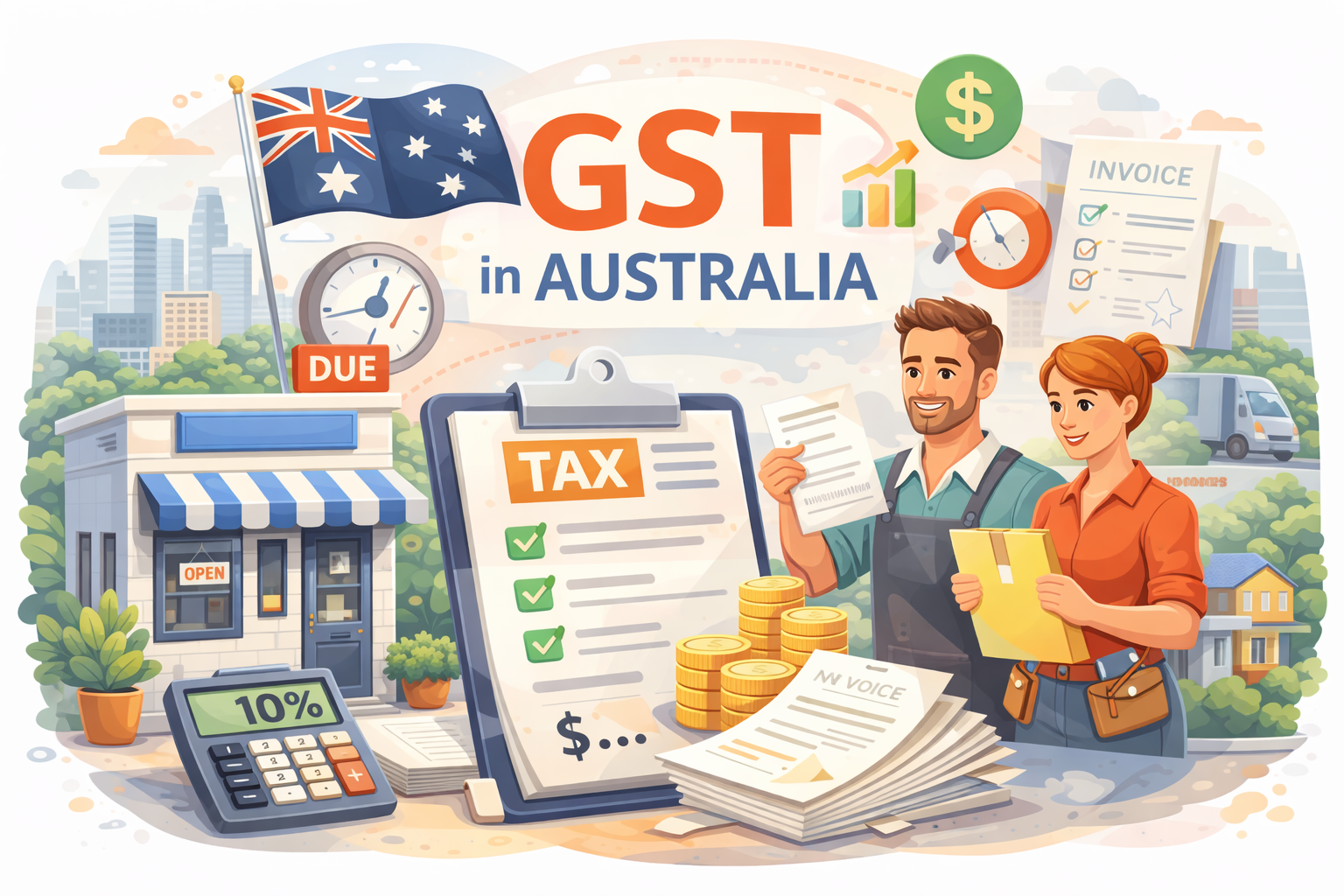
Goods and Services Tax (GST) is a 10% tax applied to most goods and services sold in Australia. As a business owner, you collect GST from your customers on behalf of the government and pass it on through your Business Activity Statement (BAS).
The key thing to understand is that GST is not your money — it belongs to the ATO. Treating it as income is one of the most common financial mistakes new business owners make.
Do You Need to Register for GST?
You must register for GST if your annual turnover is $75,000 or more (or $150,000 for non-profit organisations). If you are a taxi or rideshare driver, you must register regardless of turnover.
If your turnover is below $75,000, registration is optional. There are arguments for and against registering early:
- Reasons to register early: You can claim GST credits on business purchases, and some clients (particularly other businesses) prefer dealing with GST-registered suppliers.
- Reasons to wait: Less admin, no need to add 10% to your prices, simpler bookkeeping.
How to Charge GST Correctly
Once registered, you add 10% GST to the price of your goods and services. On your invoices, you must clearly show the GST amount separately or state that the price includes GST.
For example: if your service costs $500 plus GST, your invoice should show $500 + $50 GST = $550 total. Or you can show $550 (inc. GST).
Not all goods and services attract GST. Items that are GST-free include most basic foods, some medical services, and exports. If your business operates in these areas, speak to an accountant about which sales are taxable.
Input Tax Credits — Claiming GST Back
One of the benefits of being GST registered is that you can claim back the GST you pay on business purchases. These are called input tax credits.
If you buy a laptop for $1,100 (including $100 GST) for your business, you can claim that $100 back on your BAS. This effectively means GST-registered businesses pay 10% less for most business expenses.
To claim input tax credits, you need a valid tax invoice from your supplier showing their ABN and the GST amount.
Lodging Your BAS
Your Business Activity Statement (BAS) is how you report and pay GST to the ATO. Most small businesses lodge quarterly, though you can opt for monthly or annual lodgement.
Your BAS will ask for:
- Total sales (G1)
- GST on sales (1A)
- GST on purchases you can claim back (1B)
The difference between 1A and 1B is what you owe (or are owed) by the ATO.
BAS lodgement deadlines are typically the 28th day of the month following the end of each quarter. Missing the deadline can result in penalties, so set calendar reminders well in advance.
Tips for Staying on Top of GST
- Set aside 10% of every payment you receive into a separate savings account so you always have the money when BAS time comes.
- Use accounting software like Xero, MYOB or QuickBooks to automatically track GST on sales and purchases.
- Keep all tax invoices — the ATO can ask to see them during an audit.
- If you are unsure, hire a BAS agent or accountant. Their fee is tax deductible.
What Happens If You Get It Wrong?
The ATO is generally understanding if you make an honest mistake and correct it promptly. You can amend a previous BAS through your myGov account or by contacting the ATO. Penalties apply for deliberate evasion but are rarely imposed for genuine errors corrected in good faith.
Need a good local accountant to help with your GST and BAS? Search our directory for accounting professionals near you.