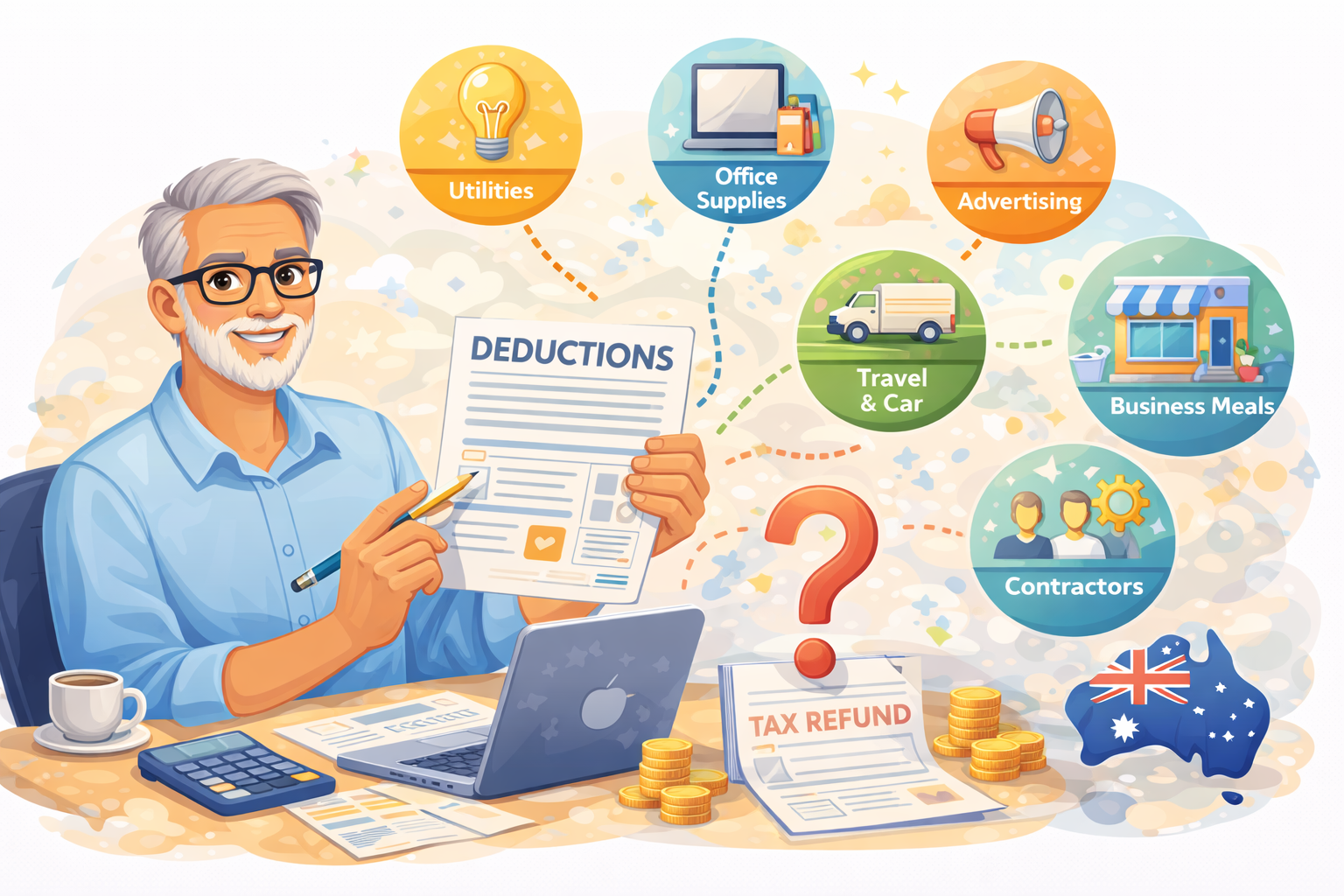
Tax time should not be something to dread — it should be an opportunity to make sure you are claiming everything you are legitimately entitled to. The Australian tax system allows small businesses to deduct a wide range of expenses incurred in earning their income, and many business owners miss deductions simply because they do not know they exist.
Here are some of the most commonly overlooked small business tax deductions in Australia.
Home Office Expenses
If you work from home — even part of the time — you may be able to claim a portion of your home running expenses including electricity, internet, phone, and even a portion of rent or mortgage interest. The ATO offers a revised fixed rate method of 70 cents per hour worked from home, which covers most running costs. Keep a record of the hours you work from home.
Vehicle Expenses
If you use your personal vehicle for business purposes, you can claim the business-use portion of running costs. For vehicles used less than 5,000 kilometres for business per year, the cents-per-kilometre method (currently 88 cents per km) is simplest. For higher business use, the logbook method — keeping a 12-week logbook of all trips — allows you to claim the actual business-use percentage of all vehicle costs.
Tools and Equipment
Tools, equipment, and technology purchased for business use are deductible. Under the instant asset write-off provisions, eligible small businesses can claim the full cost of assets in the year they are purchased rather than depreciating them over time. Check the current threshold with your accountant as this changes annually.
Professional Development and Training
Courses, workshops, conferences, books, and subscriptions that help you maintain or improve skills used in your current business are deductible. If you attend an industry conference interstate, travel and accommodation costs may also be claimable.
Marketing and Advertising
All legitimate marketing and advertising costs are deductible — website hosting, domain names, social media advertising, directory listings, print materials, signage, and promotional items. Keep your receipts and invoices.
Insurance Premiums
Business insurance premiums — public liability, professional indemnity, income protection (for sole traders), business vehicle insurance, and workers compensation — are all deductible business expenses.
Accounting and Legal Fees
Fees paid to accountants for tax return preparation and BAS lodgement, as well as legal fees incurred for business purposes, are deductible. The cost of this year's tax return is claimed in the year you pay it — which is usually the following financial year.
Bank Fees and Interest
Business bank account fees, merchant facility fees, and interest on business loans are all deductible. Make sure you have a separate business bank account — mixing personal and business finances makes it much harder to identify and claim these deductions.
Superannuation Contributions
If you are a sole trader or partner, personal superannuation contributions for which you have lodged a Notice of Intent to Claim are tax deductible. Employer superannuation contributions for employees are also deductible.
The Most Important Step
Keep every receipt. Use accounting software or a dedicated expense tracking app to capture costs as they occur rather than scrambling at year end. And work with a registered accountant who understands small business — the tax you save almost always exceeds their fee many times over.