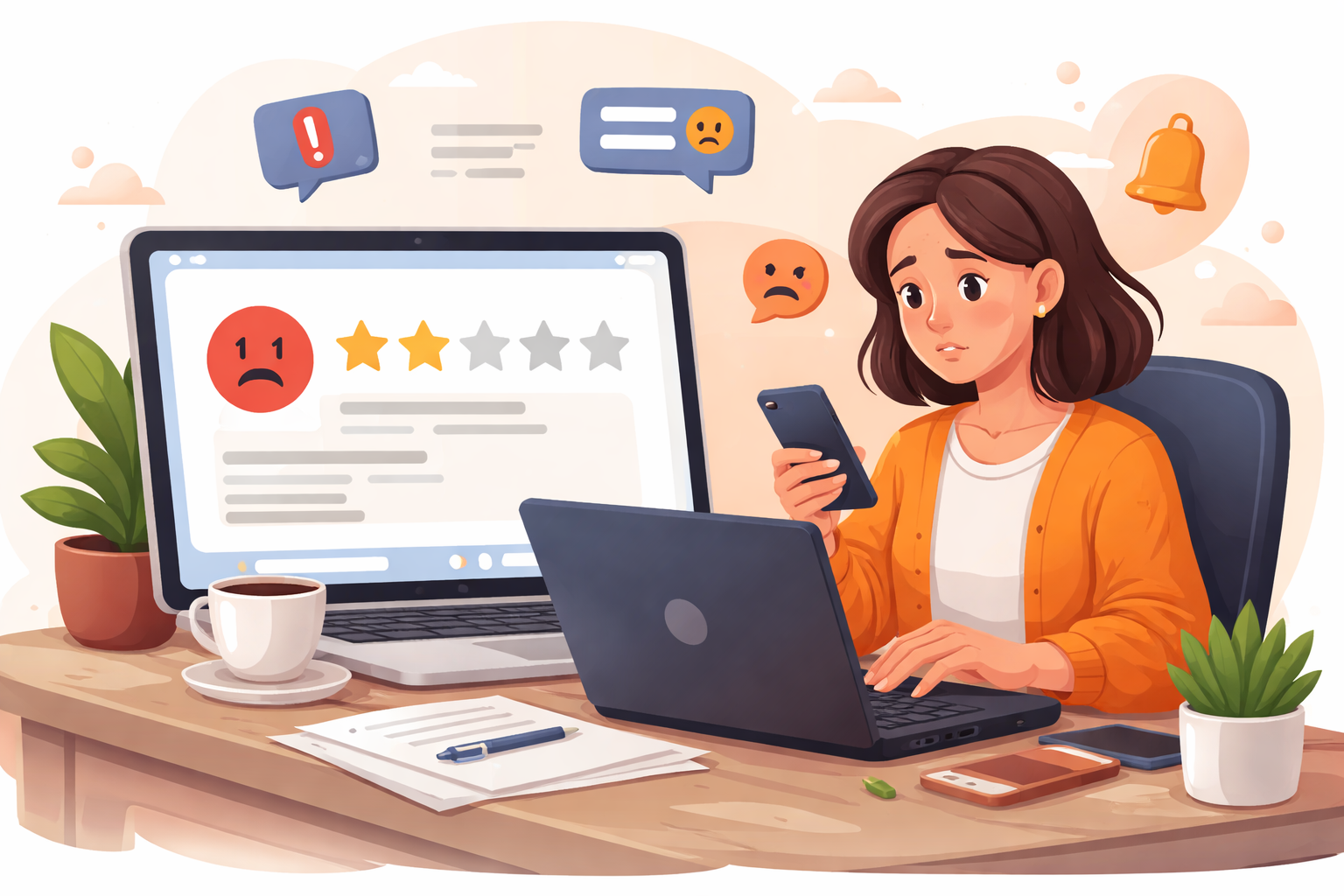
The Review You Were Dreading
Every business that operates long enough will receive a negative review. How you handle it publicly can either reassure potential customers that you take service seriously, or confirm the reviewer is point. The good news is that a well-handled negative review often does more for your reputation than a string of five-star ratings.
Step 1: Take a Breath Before You Respond
Your first instinct when you see a critical review might be to respond immediately and defend yourself. Resist this urge. Emotional responses — even understandable ones — almost always make the situation worse and are permanent and public.
Wait until you can respond calmly and professionally. Read the review several times. Try to understand the customer perspective, even if you think they are wrong.
Step 2: Investigate What Actually Happened
Before responding, find out what you can about the situation. Talk to the staff member involved if relevant. Check your records. Sometimes a review will describe an experience that does not match your records — occasionally they are even for the wrong business.
Step 3: Respond Publicly and Professionally
Always respond to negative reviews publicly, even if you plan to resolve the situation privately. Your response is not really for the reviewer — it is for every future potential customer who reads the review.
A good response:
- Thanks the reviewer for their feedback (even if it is hard to mean it)
- Acknowledges their experience without being defensive
- Takes responsibility where appropriate
- Explains what you have done or will do to address the issue
- Invites them to contact you directly to resolve it
Keep it short. A three-paragraph defensive essay draws more attention to the negative review. Two to four sentences is usually enough.
Example Response
"Thank you for taking the time to share this feedback. We are sorry to hear your experience did not meet expectations — this is not the standard we hold ourselves to. We would appreciate the opportunity to make it right. Please contact us directly at [phone/email] and we will do everything we can to resolve this for you."
Step 4: Try to Resolve It Privately
If the customer contacts you, focus on resolving the issue genuinely, not on getting them to change the review. Trying to trade a resolution for a review removal is both ethically questionable and likely to backfire. If you resolve the issue well, many customers will update their review voluntarily.
What About Fake or Unfair Reviews?
If you genuinely believe a review is fake or from someone who was never a customer, most platforms have a process for flagging and requesting removal. Document your case clearly and follow the platform process. Do not publicly accuse the reviewer of being fake — if you are wrong, the reputational damage is significant.
The Long Game: Volume Matters
The best protection against a negative review is a large volume of positive ones. A single one-star review among 47 five-star reviews barely registers with most customers. A single one-star review among three reviews is a problem.
Build the habit of asking satisfied customers for reviews. A simple follow-up message after a completed job, a card handed over at point of sale, or a link in your email signature all work. The businesses with the best online reputations are not the ones who never get complaints — they are the ones who ask for reviews consistently.