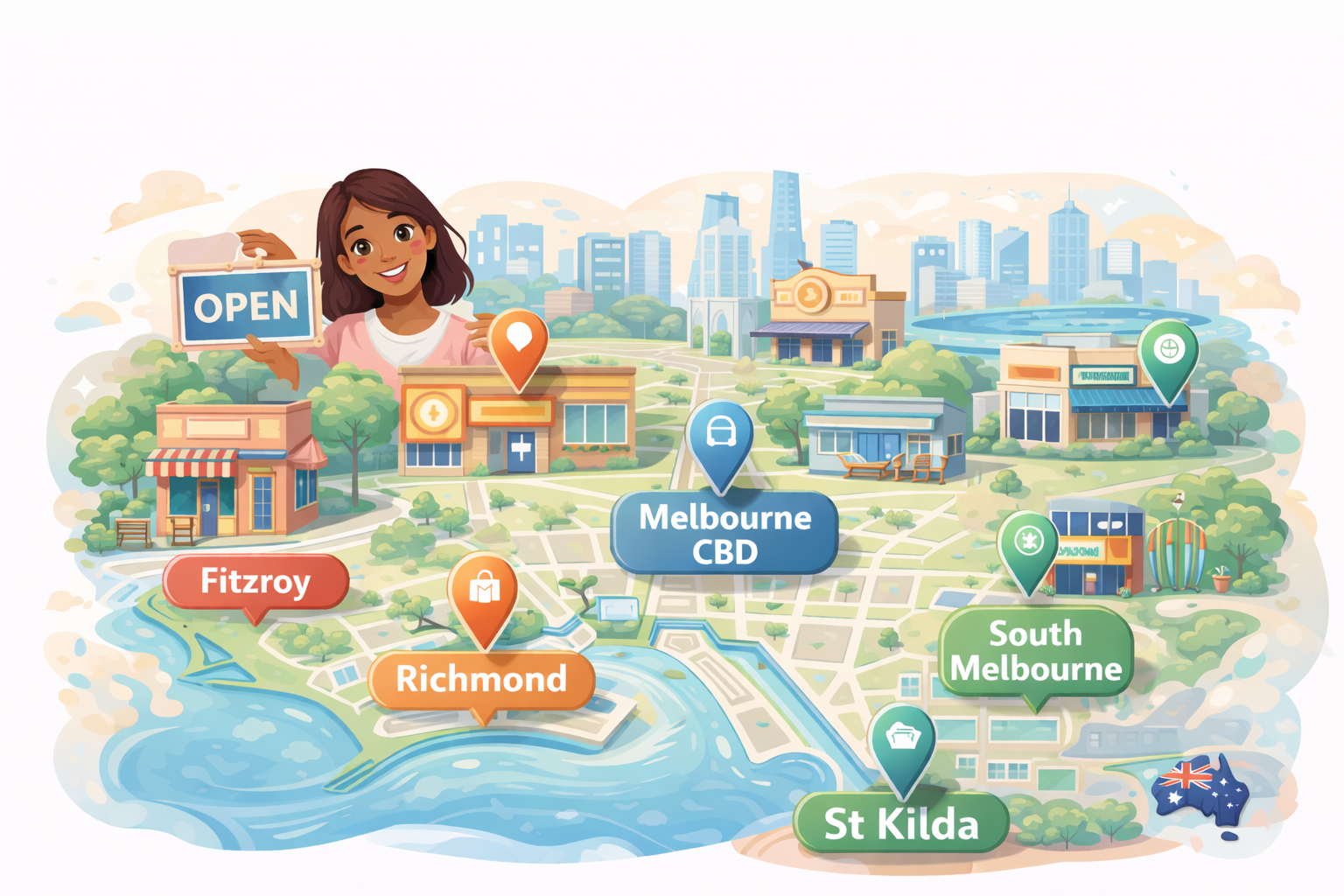
Melbourne has long been one of Australia's most entrepreneurial cities — a place where independent businesses, creative industries, and local communities genuinely support each other. Whether you are looking to open a cafe, launch a trade business, or set up a professional services practice, choosing the right location can make an enormous difference to your success.
Here are some of the best areas in Melbourne for small business in 2026.
Fitzroy and Collingwood
Fitzroy and Collingwood remain Melbourne's most vibrant inner-city business precincts. Smith Street, Johnston Street, and Gertrude Street are home to a dense concentration of independent cafes, bars, restaurants, clothing boutiques, and creative studios. High foot traffic, a young and affluent residential base, and a strong culture of supporting local make this area one of the most sought-after locations for small retail and hospitality businesses. Competition is fierce and rents are high, but the rewards for well-executed concepts are equally substantial.
Brunswick
Brunswick — particularly Sydney Road — is one of Melbourne's most culturally diverse and commercially active strips. It is a natural home for food businesses, health practitioners, tradespeople, and creative professionals. Lower rents than the inner city, strong community loyalty, and excellent public transport access make Brunswick an appealing option for small businesses looking to establish a genuine local following without inner-city price tags.
Richmond and Cremorne
Richmond's Bridge Road precinct has been evolving rapidly, and neighbouring Cremorne has emerged as Melbourne's technology and creative industry hub. For IT businesses, marketing agencies, design studios, and professional services firms, Cremorne offers proximity to the CBD, strong talent access, and an energy that attracts innovative businesses and their clients alike.
St Kilda and Elwood
The bayside suburbs of St Kilda and Elwood offer a relaxed, lifestyle-driven environment that suits cafes, wellness businesses, health practitioners, boutique retail, and personal services. Acland Street and Fitzroy Street continue to draw strong pedestrian traffic, while the residential density of the broader area supports a healthy customer base for service businesses year-round.
Preston and Northcote
High Street Northcote and the broader Preston precinct represent some of Melbourne's best emerging opportunities for small business. Rents remain relatively accessible, the demographic is young and community-minded, and gentrification has brought increased spending power without eliminating the neighbourhood character that makes these areas appealing in the first place.
The Western Growth Corridor — Footscray and Beyond
Footscray is undergoing significant transformation, with new residential development driving increased demand for local services, food, and retail. For tradespeople and service businesses in particular, the rapidly growing western suburbs — Sunshine, St Albans, Werribee, and beyond — represent excellent opportunity. Infrastructure investment is driving population growth, and many service businesses in these areas report strong demand with less competition than inner-city equivalents.
What Matters Most
Location is important, but no suburb guarantees success. The businesses that thrive in Melbourne — as anywhere — are those that know their customer, deliver consistently excellent service, build genuine community connections, and market themselves effectively. A great business in a good suburb will always outperform a mediocre business in a great one.